
Modern Homes Featuring Wooden Floating Stairs
The best wooden floating stairs don't feel trendy. They feel settled. They warm up modern interiors without turning the stair into a rustic throwback or a piece of showroom theater.
Published: April 5, 2026
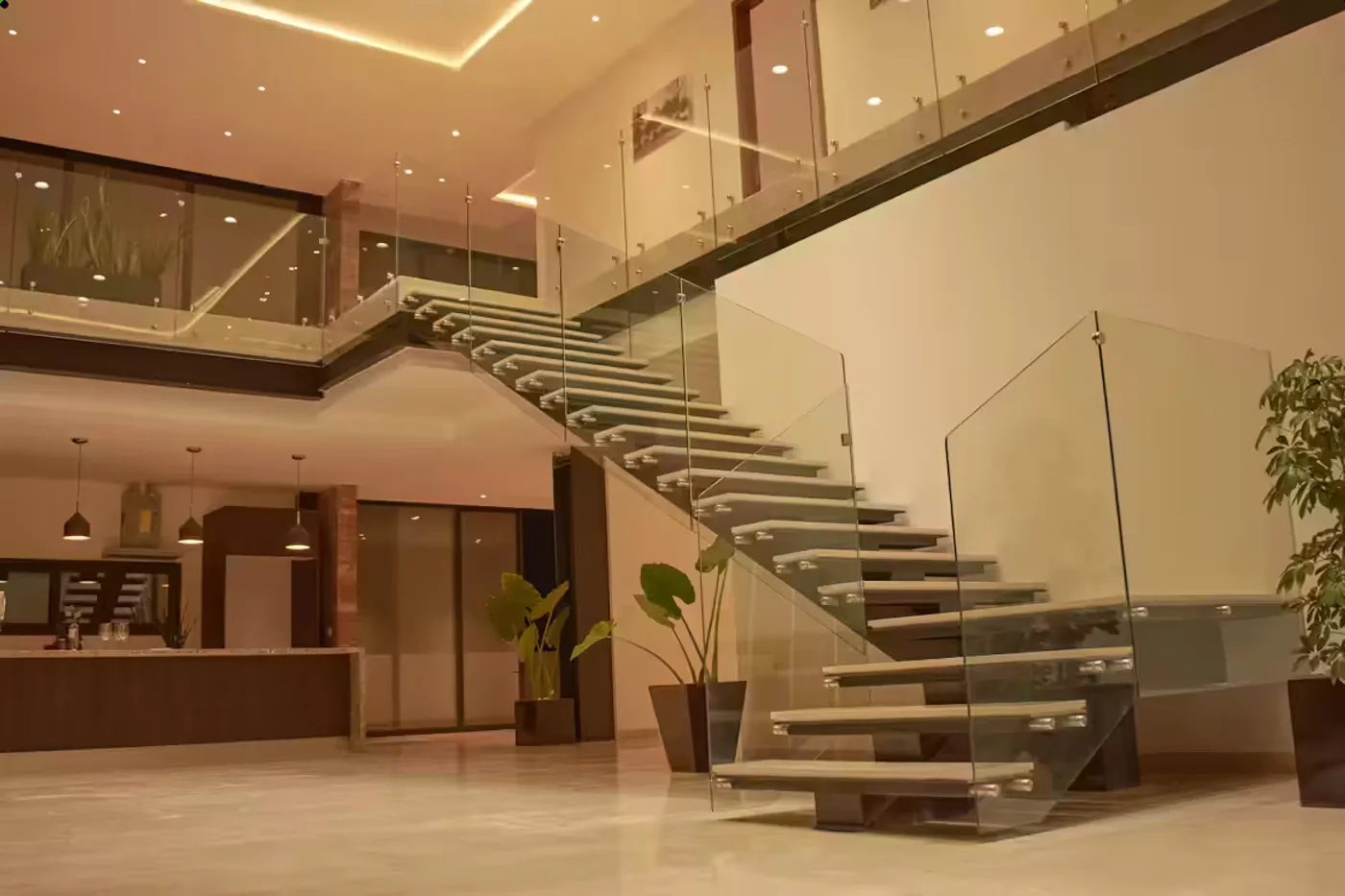
At Jacksonville Floating Stairs , we like wooden floating stairs because they do something steel alone can't: they make a modern room feel finished instead of cold. A good wood tread introduces grain, depth, and shadow without giving up the clean lines people want from a floating system.
Why wood works so well in modern interiors
Modern homes usually need one material that softens the harder edges. Concrete, steel, glass, and white walls can look sharp, but they can also start feeling thin if everything is crisp all the time. Wood gives the stair some body.
That's why you see it so often in strong residential work. White oak, walnut, ash, and even darker-stained species can carry a room without shouting. They make the stair look expensive in the right way.
The best examples use restraint
Want a quick rule? If the treads are doing the talking, the rest of the stair should calm down. Hidden support, slim rails, and clean wall lines usually work better than piling on exposed steel, dramatic grain, bold lighting, and oversized slabs all at once.
We see this in modern homes all the time. The projects that age best usually choose one strong visual move. Thick white oak treads with a quiet glass rail. Dark walnut treads with a recessed steel spine. Not five features fighting for attention.
Wood species changes the mood of the whole house
White oak keeps things light and architectural. Walnut reads richer and more tailored. Rift-sawn material feels calmer than wild cathedral grain. Matte finishes usually age better than glossy ones because they don't turn every footprint and scratch into a highlight.
That's why material selection should happen alongside flooring, millwork, and cabinetry. A wooden floating stair is not an isolated object. It sits in the center of a larger palette and needs to belong there.
Structure still matters more than finish
A beautiful wood tread does not rescue a weak support system. Modern homes featuring wooden floating stairs look effortless because the hidden work was handled properly first. Wall reinforcement, stringer stiffness, attachment details, and tread fastening all decide whether the stair feels quiet or hollow.
Ever walked on a floating stair that creaked or flexed? That's what happens when the build chases appearance and ignores the structure. People notice that immediately, even if they can't explain it.
Where wooden floating stairs look strongest
- Open entry halls that need one warm focal point
- Two-story living rooms with large window light
- Coastal modern interiors that need less metal glare
- Minimal homes where the material palette is intentionally tight
- Renovations replacing heavy boxed-in stair enclosures
In those settings, the stair becomes architecture instead of just circulation. That's the whole point.
The takeaway
Wooden floating stairs work in modern homes because they balance light structure with warm material. Done well, they don't feel like a trend piece. They feel like the house was always supposed to have them.
The formula is simple: good proportions, quiet support, the right species, and no unnecessary drama. That's what keeps the stair modern five years from now too.
Thinking about wood treads on a floating stair?
We can review species, tread thickness, rail options, and the support strategy before you lock in a look that only works on a mood board.