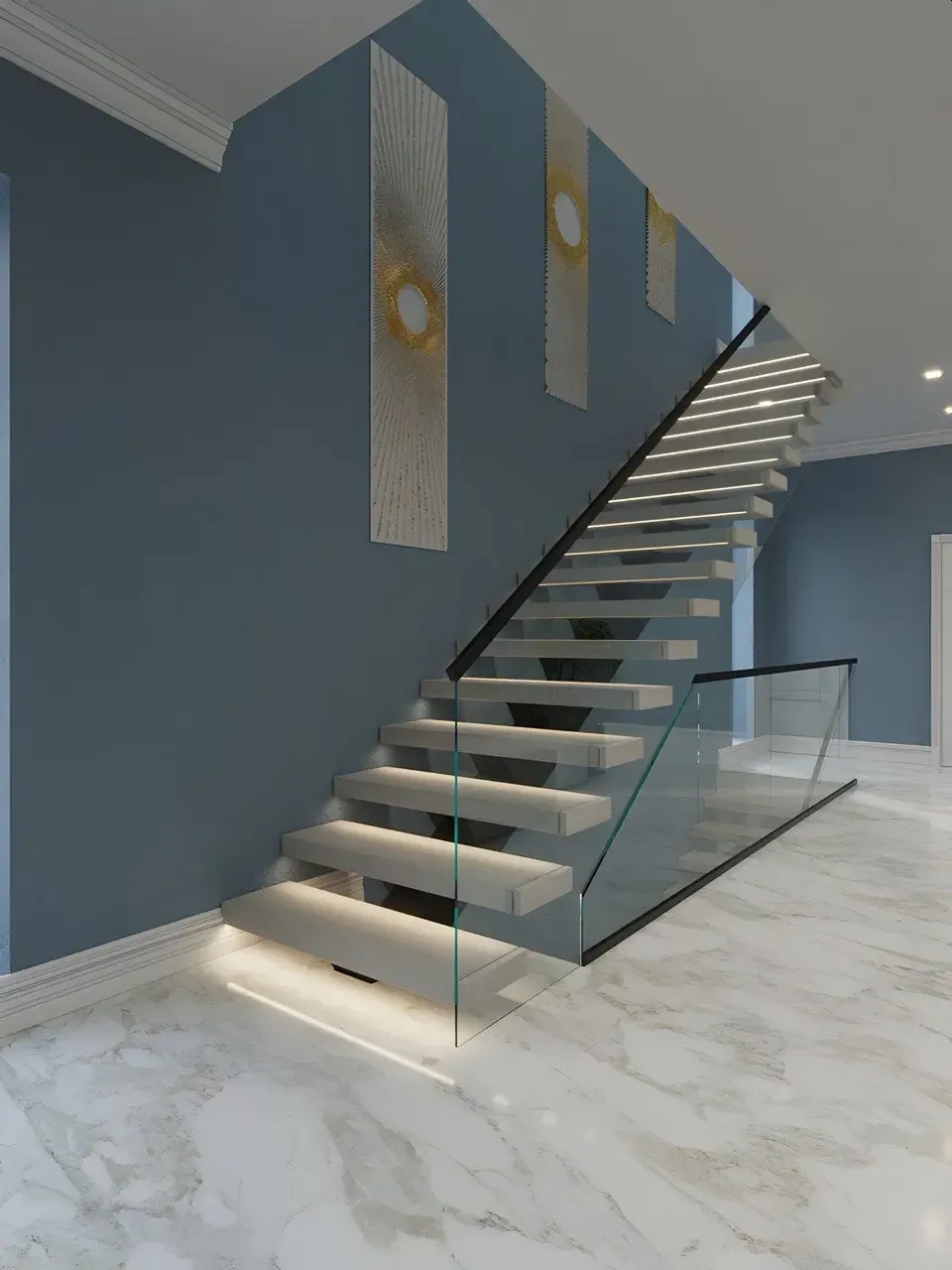
Floating staircase with integrated LED lighting under each tread

Integrated LED Stair Lighting in Jacksonville, FL

Low-voltage LED routed through stringers or embedded in tread edges. Invisible when off. Architectural when on.

Jacksonville Floating Stairs integrates LED lighting into stair systems during fabrication — not as an afterthought. When lighting channels are designed into the stringer or tread profile from the start, the result looks like the light is part of the architecture, not stuck on afterward.

Most residential floating stairs can accommodate low-voltage LED strips routed through hollow steel stringers. The driver is concealed in the wall cavity or in a junction box near the stair base. Motion sensors trigger illumination when someone approaches from either landing — useful for nighttime use without flipping switches.

For hardwood or glass tread systems, we can route LED channels into the underside or edge of each tread. This requires milling the channels before finishing, which is another reason lighting has to be specified early. It's not something you add to an already-finished staircase without visible modification.

Smart-home compatibility is a common request. We wire for standard 0-10V dimming or PWM control protocols that work with Lutron, Leviton, or third-party automation systems. We coordinate the electrical rough-in with your electrician so the wiring is in place before drywall is closed — again, because retrofit lighting that has to be surface-mounted looks like a surface-mount, not an integrated feature.

Floating staircase with integrated LED lighting under each tread

Lighting that looks built-in.

Best results when lighting is specified before fabrication begins.

How We Integrate LED Lighting
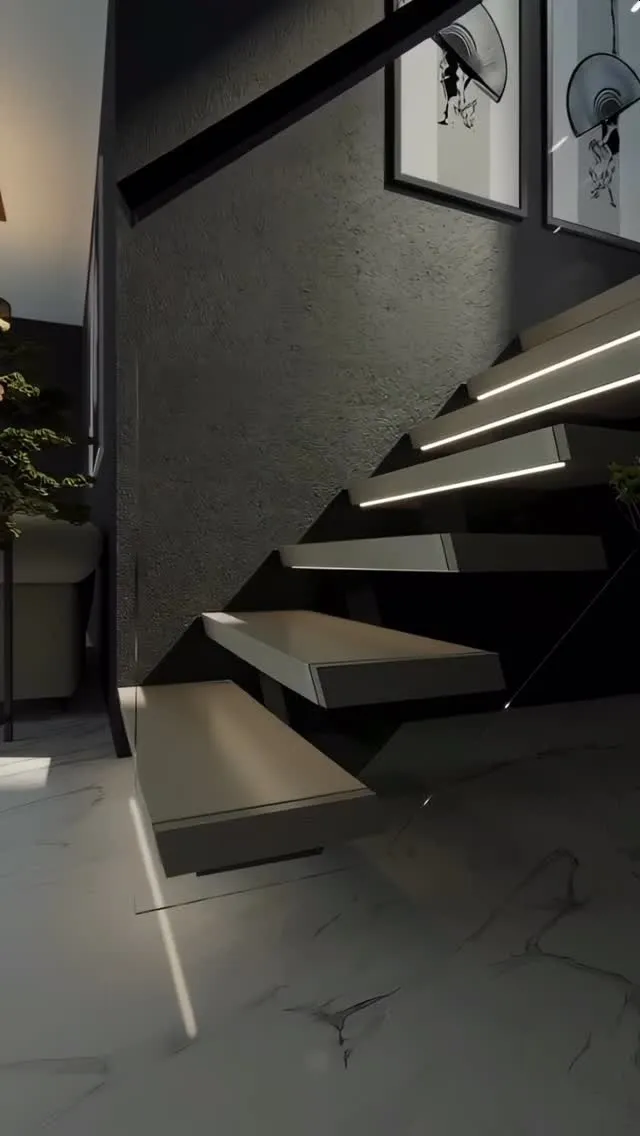
LED stair lighting installation with low-voltage wiring in progress
01
Lighting Specification & Control System Selection
We determine color temperature, dimming protocol, and control hardware based on your automation system and usage requirements before fabrication begins.
02
Channel Design in Stringer or Tread Profile
LED channels are designed into the fabrication drawings. Hollow stringer sections, tread edge routed channels, or under-tread mounting brackets are designed based on the material system.
03
Electrical Rough-In Coordination
We coordinate with your electrician on conduit routing, driver location, and junction box placement before drywall is closed. Lighting wiring is in place before installation day.
04
LED Strip Installation & Connection
LED strips are installed into channels, connections are made at the driver, and motion sensor positions are set. Diffuser profiles are installed to control light dispersion.
05
Final Calibration & Smart-Home Integration
Dimming levels, motion zones, and timer behavior are configured. We test the full lighting sequence and integrate into your home automation system if applicable.
Project details

Lighting has to be designed with the stair, not after it

Integrated lighting works best when the channels, drivers, wire paths, and switch strategy are planned before fabrication. It looks custom when the light source disappears and the glow reads as part of the architecture.

We also care about serviceability. A good system should let you access drivers and low-voltage connections later without tearing apart finished treads or opening a wall that was already painted.

Included in the planning
  • Low-voltage routes coordinated with stringers and tread build-ups
  • Diffusers and channel details chosen to avoid visible hot spots
  • Lighting control planned for both ambiance and nighttime wayfinding

LED Stair Lighting — FAQ

Can LED lighting be added to an existing floating staircase?
Sometimes. If the existing stringer has a hollow section and accessible wiring paths, retrofit lighting is feasible. Surface-mounted strip lighting can also be installed if concealment isn't critical. We assess existing conditions first and give an honest answer about what's possible without major modification.
Does LED stair lighting count as the required stair lighting under code?
Florida Building Code requires stair illumination of at least 1 footcandle at tread surfaces. LED strip systems integrated at tread edges or under-tread positions typically meet this requirement when properly specified. We confirm compliance with your electrician and the permit reviewer.
What color temperature works best for stair lighting?
2700K to 3000K produces warm light that reads well on wood treads and complements most residential interiors. 4000K is cleaner and cooler — better for modern minimalist spaces or glass tread systems. We bring samples to the site so you can compare color temperatures in your actual space before committing.
Can I control stair lighting with Alexa or Google Home?
Yes, using a compatible smart dimmer or LED driver with Wi-Fi or Zigbee connectivity. We specify drivers that work with standard consumer smart-home ecosystems. Your electrician handles the smart-home pairing as part of rough-in or after installation.
How long do integrated LED strips last before needing replacement?
Quality LED strips rated at 50,000 hours will run for over 10 years at typical residential usage levels. Drivers typically last 5 to 8 years. We specify commercial-grade components, not consumer-grade strips, so the performance over time is more predictable.

Lighting That Looks Like It Belongs

Designed into the stair during fabrication — not added later as surface-mount.