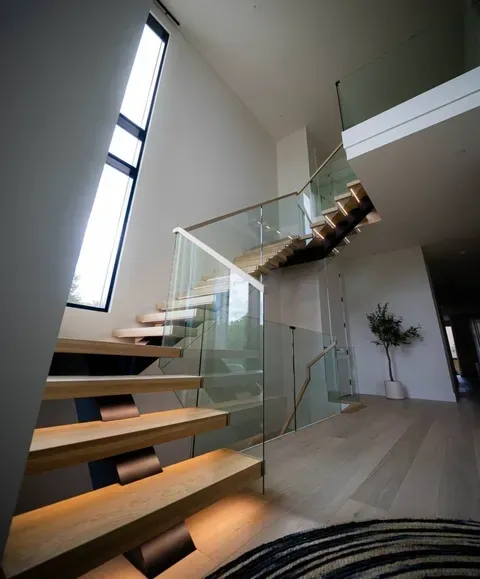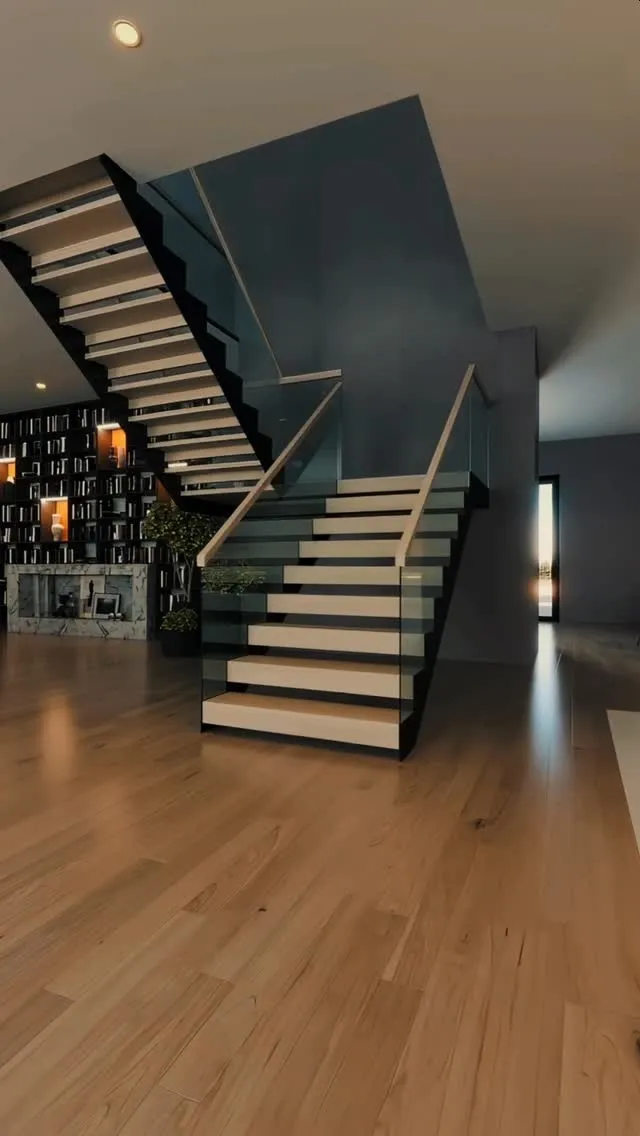
Frameless glass balustrade rail system protecting a floating stair

Custom Glass Balustrade Rail Systems in Jacksonville, FL

Frameless point-fixed glass panels that protect without blocking the view through your floating staircase.

Jacksonville Floating Stairs sizes, cuts, and installs glass balustrade panels to your staircase's specific geometry. Every panel is custom — there are no standard-length panels trimmed to fit.

Glass rail systems preserve the visual openness that makes floating stairs worth building. A traditional turned baluster rail would defeat the purpose of the cantilevered system beneath it. Glass panels allow light to pass through, keep sightlines open between floors, and create a guard system that reads as almost nothing from across the room.

Point-fixed systems use stainless standoffs that drill through the glass to a structural backing. The glass appears to float with minimal hardware visible. Channel-base systems embed the glass bottom edge into an aluminum or steel base channel mounted to the tread edge. Channel systems are more common on shorter rail runs; point-fixed is preferred for longer spans and when minimal hardware appearance is the priority.

Florida Building Code requires guards at open-sided stairs to withstand 200 pounds of concentrated lateral force at the top of the rail. We engineer the base connection to meet this requirement. A glass panel that isn't properly anchored at the base will pass until it's pushed — and then it won't. We don't treat code compliance as a formality.

Frameless glass balustrade rail system protecting a floating stair

Custom panels. Proper engineering.

Deposit-backed site visit. Sizing and hardware recommendation included.

How We Build Glass Rail Systems

Glass balustrade rail installation with hardware mounting visible
01
Rail Height & Panel Layout Design
We determine panel heights, joint spacing, and top rail configuration. Florida code requires 42-inch guard height on stairs with a rise over 30 inches. Panel layout is designed to meet code with minimal visible joints.
02
Custom Panel Fabrication
Each panel is cut and tempered to exact dimensions. Drilling for point-fixed hardware is done before tempering — you can't drill tempered glass after the fact. Edge polishing and corner beveling are standard.
03
Base Connection Engineering
The tread-to-rail base connection is engineered to meet the 200-pound lateral load requirement. Channel base or point-fixed standoffs are selected based on tread material and geometry.
04
Panel Setting & Hardware Torque
Panels are set plumb and true. Point-fixed hardware is torqued to spec with neoprene bushings to prevent glass-to-metal contact. Channel base panels are set with structural silicone at the glass edge.
05
Top Rail Installation & Load Test
Top rail is mounted at the required height. The completed system is load-tested and verified before the permit inspection. Final hardware cleanup and glass cleaning are done before handoff.
Project details

Rail systems have to protect without crowding the stair

Glass balustrades are usually chosen because they keep the floating stair open. That only works if the glass thickness, mounting method, and edge details are coordinated with the stair from the beginning.

We use rail systems to solve safety without turning the staircase into a forest of posts. The cleaner the stair design, the more important each glass joint, reveal, and hardware location becomes.

Included in the planning
  • Panel sizing coordinated with tread spacing and landing geometry
  • Mounting systems chosen around structure, sightlines, and maintenance access
  • Hardware finishes matched to the stair instead of treated like an afterthought

Glass Balustrade Rails — FAQ

Do glass rail systems meet Florida Building Code?
Yes. Florida Building Code permits glass balustrade systems when the glass is tempered, the connection hardware is engineered for the required lateral loads, and the top rail height meets the 42-inch minimum requirement. We engineer these to code and document it in the permit package.
What's the difference between frameless and semi-frameless glass rails?
Frameless systems use minimal point-fixed hardware with no vertical posts. Semi-frameless systems have intermittent steel posts with glass panels between them. Frameless provides the cleanest look but requires thicker glass panels to handle the unsupported span. Semi-frameless allows thinner glass and is typically less expensive.
Is low-iron glass worth the extra cost for balustrades?
In most cases, yes. Standard float glass has a green tint that becomes visible at panel edges and at longer viewing angles. Low-iron glass is substantially clearer. For a floating staircase where you're looking through multiple panels from across a room, the difference is noticeable. We bring samples to compare in person.
How do glass rails hold up to kids and pets?
Tempered glass is very impact-resistant under normal household conditions. Kids pushing on the glass won't break a properly installed panel — the structural concern is lateral load at the top rail, which we engineer for. Scratches from pets on the glass surface are possible; the glass itself won't crack from casual contact.
Can cable rail be used instead of glass on a floating staircase?
Yes. Cable rail is a common alternative. It has a more industrial aesthetic and requires tensioning hardware at end posts. Florida Building Code requires cables to be spaced so that a 4-inch sphere can't pass through — this affects horizontal cable configurations but not vertical ones. We install cable rail systems as well as glass.

Glass Rails That Protect Without Visual Weight

Custom panels. Engineered to code. Sized and installed to your specific stair geometry.