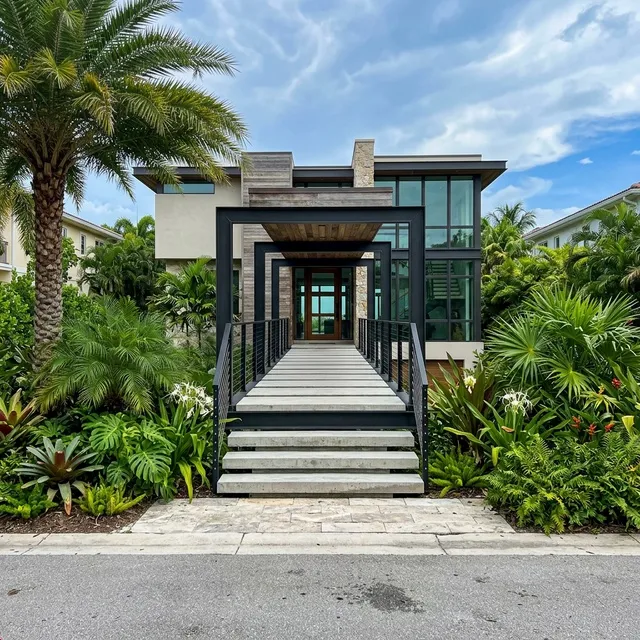
Exterior floating entry stair built for coastal weather conditions

Exterior Floating Stair Entryways in Jacksonville, FL

Outdoor floating entries built for Northeast Florida's UV exposure, humidity, and salt air. Marine-grade hardware standard — not an upgrade.

Jacksonville Floating Stairs designs exterior floating stair entries using materials specified for Jacksonville's actual outdoor conditions — not interior materials used outside.

Northeast Florida is tough on exterior metalwork. Salt air from the Atlantic coast reaches as far inland as the Intracoastal Waterway. UV exposure in the subtropics is intense year-round. Humidity cycles between wet summers and drier winters expand and contract materials at joints. These aren't theoretical concerns — they're the actual failure modes we've seen on exterior stairs built without proper material specs.

For coastal projects in Atlantic Beach, Neptune Beach, and Jacksonville Beach, we specify 316L stainless steel for all exposed hardware, hot-dip galvanized connections for steel-to-concrete interfaces, and teak or composite decking for tread surfaces. For homes further inland, we adjust the spec accordingly — you don't need marine-grade everywhere, but the basic corrosion protection spec doesn't change.

Exterior floating stairs at a home entry also have to meet ADA and Florida Building Code handrail requirements. We design the rail geometry, graspability, and extension dimensions to code — not approximately to code. This matters at permit inspection and it matters for homeowner liability if someone falls.

Exterior floating entry stair built for coastal weather conditions

Built for Florida's outdoors.

Deposit-backed site visit. Marine-grade specs included from day one.

How We Build Exterior Floating Entryways
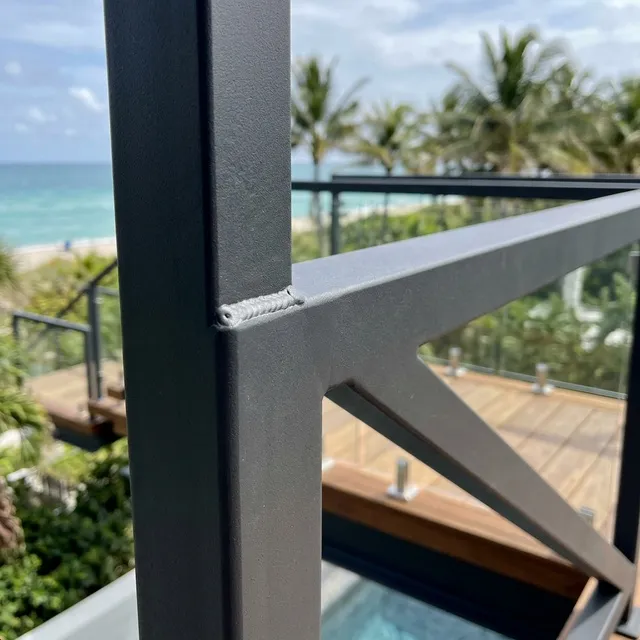
Exterior floating stair installation at a residential entryway
01
Site & Exposure Assessment
We assess your home's proximity to salt air, sun exposure on the stair face, and drainage conditions around the entry. The material spec is calibrated to your specific site.
02
Foundation & Wall Anchor Design
Exterior stairs require different anchor conditions than interior systems. We design for water infiltration at penetrations, galvanic isolation at dissimilar metals, and waterproof detailing at wall interfaces.
03
Material Fabrication with Corrosion Specs
Steel is prepared with hot-dip galvanizing or epoxy coating depending on exposure level. Hardware is 316L stainless throughout. Tread material is selected for exterior UV and moisture resistance.
04
Waterproof Wall Penetration Installation
Anchor penetrations are flashed and sealed against water intrusion. Sealants are specified for long-term UV resistance. We don't use standard construction sealants at exterior structural connections.
05
Handrail Compliance & Final Inspection
Handrail graspability, extension, and height are verified against Florida Building Code. We coordinate the permit inspection and close out the permit after passing.
Project details

Exterior work changes the material conversation

Outdoor floating entryways in Jacksonville deal with sun, rain, humidity, and salt exposure all at once. That means every finish, fastener, and drainage decision matters more than it would on an interior stair.

We treat exterior stairs as exposure-rated assemblies, not just indoor details moved outside. The visual language stays clean, but the hardware, coatings, and waterproof transitions need to be chosen for a real Florida service life.

Included in the planning
  • Coastal-grade coatings and hardware selected for corrosion resistance
  • Drainage and slip-resistance considered with the finish package
  • Transitions detailed so the stair performs through storms and wet seasons

Exterior Floating Entryways — FAQ

What materials hold up longest in Jacksonville's coastal climate?
316L stainless steel for hardware, hot-dip galvanized structural steel, and teak or IPE decking for treads. Composite tread materials are also a good option for homeowners who want zero maintenance on the tread surface. We go through these options based on how close you are to the beach and your maintenance preferences.
Does an exterior floating stair need a permit?
Yes. Any structural stair attached to the home's exterior requires a building permit in Duval County. We handle the full permit package including stamped structural drawings and waterproofing details at penetrations.
How do I keep an exterior floating stair from looking dated in 5 years?
Material selection matters more than design style. Clean geometry in natural materials — teak treads, brushed stainless rails — ages well. What ages poorly is powder-coated steel that wasn't properly prepped and fades, or cheap hardware that corrodes visibly. We spec for longevity, which keeps the stair looking intentional for a decade without refinishing.
Can an exterior floating stair be covered or partially enclosed?
Yes. A covered stair entry reduces UV and rain exposure significantly, which extends the life of finish materials. We coordinate the structural support for any overhead cover with the stair design so both are integrated as one system.
How long do exterior floating stairs last in Northeast Florida?
With proper material specs and annual inspection, structural service life exceeds 30 years. Tread surfaces and finish systems will need maintenance or replacement at intervals depending on UV exposure and use. We design with that in mind — tread replacement shouldn't require disassembling the structural system.

Exterior Stairs Built for Northeast Florida

Marine-grade hardware. UV-stable finishes. Waterproof penetrations. Standard from the start.